Description
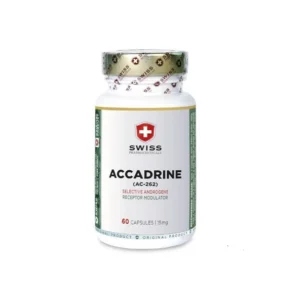
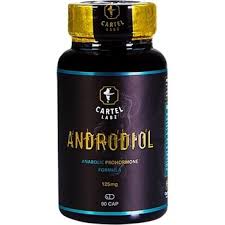
Swiss Pharmaceuticals AC-262 (Accadrine) 15 mg – 60 Capsules
Swiss Pharmaceuticals AC-262 (Accadrine) 15 mg – 60 Capsules is listed as 15 mg per capsule in a package of 60 capsules. This is a neutral product-information and regulatory-review draft, not medical advice or proof of authorisation.
The product is reported to contain AC-262,536 at 15 mg per capsule. AC-262,536 is a non-steroidal selective androgen receptor modulator, commonly abbreviated as a SARM. The exact isomer, purity, inactive ingredients, and batch composition of the commercial capsules require verification.
Reported Product Profile
Swiss Pharmaceuticals MK-777 (Acetamoren) 10 mg – 60 Capsules
| Characteristic |
Reported information |
| Active ingredient |
AC-262,536, also called Accadrine |
| Strength |
15 mg per capsule |
| Package |
60 capsules |
| Status |
Investigational selective androgen receptor modulator; no approved human use confirmed |
What Is AC-262,536?
AC-262,536 was developed as an experimental compound that binds to the androgen receptor. Its published pharmacological characterisation is primarily preclinical. In laboratory and animal models, it acted as a partial androgen-receptor agonist and showed different maximum effects in muscle-related and prostate-related tissues. This experimental selectivity does not prove safety or effectiveness in people.
How It Works
Swiss Pharmaceuticals MK-777 (Acetamoren) 10 mg – 60 Capsules
The androgen receptor is a nuclear receptor that changes gene transcription after binding an activating molecule. AC-262,536 can enter cells, bind the receptor, and alter expression of androgen-responsive genes involved in protein metabolism, muscle tissue, bone, reproductive physiology, and endocrine feedback. As a partial agonist, it may activate the receptor less fully than testosterone in some experimental systems.
The term selective means that a compound may produce different responses across tissues; it does not mean that it acts only in muscle or that unwanted androgenic effects are absent. Tissue selectivity observed in castrated rats cannot be translated directly into a safe human dose, predictable muscle gain, or reduced prostate and hormonal risk.
Evidence and Product Limitations
The main published evidence includes receptor assays and short animal studies. There is no established, authorised therapeutic indication and no adequate body of controlled human trials defining efficacy, pharmacokinetics, reproductive effects, cardiovascular outcomes, or long-term cancer risk. Online cycle reports and before-and-after photographs are not substitutes for clinical research.
Commercial listings and the uploaded workbook report 60 capsules at 15 mg, but no official manufacturer certificate was available to verify the active isomer or the amount delivered by each capsule. Products sold as SARMs have historically shown risks of mislabelling, substitution, contamination, and inconsistent concentration.
Safety and Regulatory Considerations
Androgen-receptor activation may suppress natural testosterone production and affect fertility, menstrual function, lipids, liver enzymes, blood pressure, mood, skin, hair, and prostate-related tissues. Virilising effects are possible in women. Liver injury has been reported with the broader SARM category, although the exact incidence and risk profile of AC-262,536 remain unknown.
AC-262,536 is not a conventional food ingredient and has not been confirmed as an authorised medicine in the EU. Selling it for human consumption may conflict with medicines, food, novel-food, and consumer-protection rules. Medical or performance claims should not be published without a lawful authorisation and approved wording.
Important: No dosage, cycle, treatment, or guaranteed-benefit guidance is provided. Confirm identity, purity, composition, and lawful supply for the specific batch.